Chengdu Guides
Chengdu Nightlife Guide: Where Locals Actually Drink
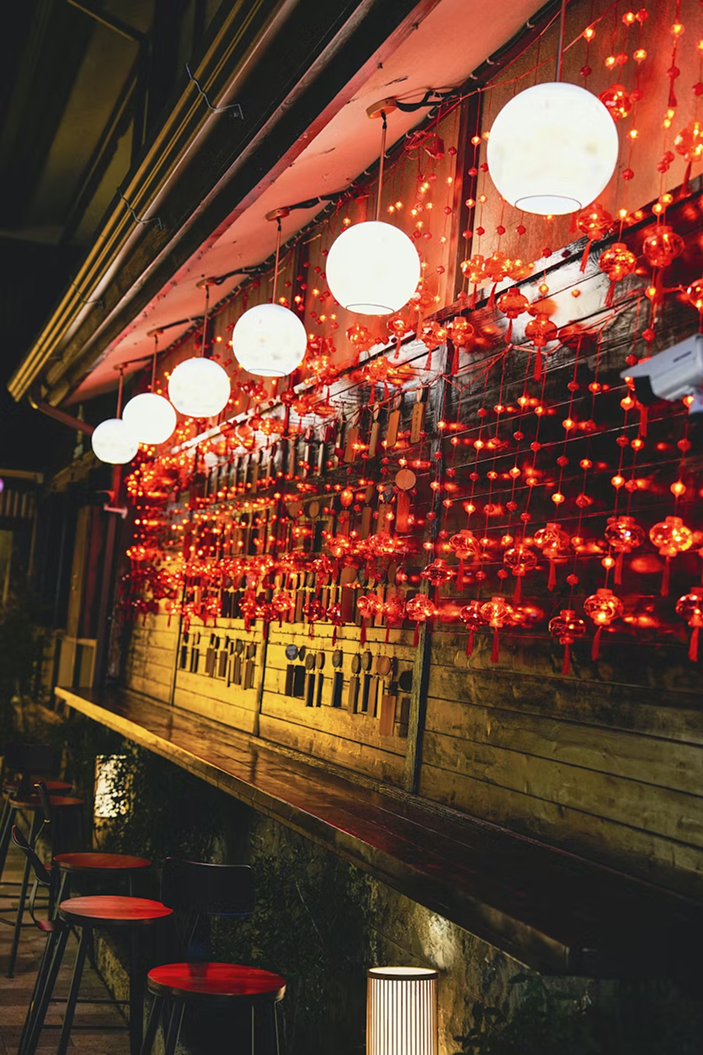
Every guide will tell you to go to Jiu Yan Qiao on a Saturday. That’s like saying you’ve experienced New York by going to Times Square at lunchtime. Technically Chengdu. Technically nightlife. Technically fun, if you’ve never seen a coloured light before.
I keep meeting visitors who tell me Chengdu nightlife was “fine, kind of overrated honestly,” and every single time it turns out they went to the same three places, on the wrong nights, in the wrong order, and didn’t get within a kilometre of where the city actually parties. So I’m writing this to fix that. There are five neighborhoods that matter. Pick the one that matches the night you want, and you’ll have a better time than 90% of the people walking around with a Google Maps pin and a confused face.
Jiu Yan Qiao (九眼桥) — the famous one
Yes, it’s beautiful. The bridge, the river, the lanterns, the boats with people screaming for photos. Walk it once. Take the picture. I’m not going to be the one who tells you to skip the famous bit.
But the bars themselves? Most of them are 慢摇吧 — “slow shake” bars. Which is a polite local way of saying: pay 800 kuai for a table, watch a DJ play the same Douyin track for the eighth time tonight, and try to have a conversation while the speaker melts your eardrum. There are good ones — usually the smaller spots tucked off the main strip — but you have to know which doors to push, and the touts on the strip will absolutely try to wave you into the worst one because that’s where their commission is best.
If you do go: Saturday is full chaos, Friday is the sweet spot, Tuesday-Wednesday is dead, and you want to be there by 10pm or you’ll be queuing. Don’t order the cocktails — they’re sad. Order beer or 白酒. (More on the 白酒 below. Be careful.)
Lan Kwai Fong Chengdu (兰桂坊) — yes, that’s actually the name
I know. The name is ridiculous. Yes, they really did just copy Hong Kong’s Lan Kwai Fong, drop it on the riverbank near 合江亭, and call it a day. I rolled my eyes too. Then I went, and I had to admit — the clubs there are genuinely some of the best in the city.
This is where you go if you want to dance. Big rooms. Sound systems that were actually planned. A crowd that came specifically to go out, not to film TikToks. The format is heavily table-based — bottle service is the norm and ordering a single cocktail at the bar gets you the kind of look usually reserved for someone who lights a cigarette in an elevator — but if you’re a group of three or more, splitting a table is genuinely fun and not actually that expensive.
What it is not: a place to ease into the night. Don’t show up here at 9pm. You’ll be standing alone watching the staff fold napkins. We rarely start a night here. We end here, around 1am, when the energy in the rest of the city has peaked and we want to push it harder.
Yulin (玉林) — and here is where I get loud
If you leave Chengdu without spending a night in Yulin, I’m going to be polite and not say anything, but I’m going to think it. This is the neighborhood. This is the Chengdu that Zhao Lei wrote a song about — yes, that song, the one that made every Chinese 22-year-old book a flight here in 2017 and the one your taxi driver will play for you whether you ask or not.
The vibe doesn’t really exist anywhere else in China. You walk down what looks like a regular residential street, see a glow coming from a courtyard, push through a curtain, and there’s a band playing folk-rock to thirty people in a room the size of a one-bedroom apartment. The dog under the bar is real and his name is probably 旺财. The beer is cheap. The crowd is artists, students, people who’ve lived here for ten years, and the occasional foreigner who figured it out.
The famous spot is 小酒馆 (Little Bar) on Yulin Road — the one in the song, still open, still good, but on weekends it’s a tourist destination so go on a Tuesday or skip it. Within a fifteen-minute walk there are at least a dozen others that aren’t famous and are, in my completely unbiased opinion, better. None of them have an English menu. None of them care that you don’t speak Mandarin. Point at what someone else is drinking. That’s how it works.
This is the part of Chengdu I’m most protective of, and also the one I most want visitors to see. Both things are true.
Tongzilin (桐梓林) — where the foreigners live
South of centre, near the South Railway Station. If you’re an expat who’s been in Chengdu more than two months, you already know about this neighborhood. It’s where most of the foreign residents live, and the bars reflect it: more wine, more craft beer, more sit-and-talk, more English on the menu. Slightly older crowd. People come here to catch up with friends, not to lose their minds.
Honest take: it’s not where I’d send you for a night out, but it’s a great Sunday-evening spot, or a great place to start before heading north. Some of the best Italian, Mexican, and Thai food in the city is also two blocks away, which makes it a strong dinner-and-drinks combo.
Kuanzhai Xiangzi (宽窄巷子) and Tai Koo Li (太古里) — the polished ones
Kuanzhai by day is a tourist factory. Kuanzhai by night, after the day-trippers leave around 9pm, is suddenly a different place — small courtyard bars in old grey-brick buildings, low lighting, slow drinks, low ceilings, and absolutely no dance floor. This is your first night, jet-lagged, want a quiet drink and to look at lanterns neighborhood. It’s not a party. It’s a mood.
Tai Koo Li is the other side of the same coin — newer, glossier, the bars there are the kind where the bartenders take cocktails seriously and charge you accordingly. Good for a date. Good if you’ve packed something other than hiking shoes. Bad if your goal for the night involves dancing.
A few things that will save your night
The stuff every visitor learns the hard way:
Things start late. “Going out at 8pm” in Chengdu means sitting down for dinner. Bars get busy around 10. Clubs don’t fill until 11 or midnight. If you’re early, eat first — the chuanchuan and shaokao stalls outside Jiu Yan Qiao stay open as long as the bars do, and they’re an actual highlight, not a backup plan.
Cash will not save you. Almost every venue is Alipay or WeChat Pay only. Some of the bigger spots now accept international cards, but if you don’t have mobile pay set up before you arrive, you will spend half your night trying to find an ATM. This is the single most common thing visitors get caught out by. Sort it before you land.
Sichuan drinks hit harder than you think. The local baijiu (白酒) is 50%+ alcohol and someone, somewhere, will absolutely try to share it with you because that’s how friendships work here. Beer in Chengdu is also stronger and dramatically cheaper than what you’re used to. Pace yourself, especially on the first night. The altitude isn’t really an excuse, but you’ll use it anyway.
The metro stops at 11. Plan the back half of the night around taxis. Didi (the Chinese Uber) is the answer; foreign cards struggle inside the app, so set up Alipay-linked Didi before you go out, or have your hotel call you a cab. Don’t get into anything that isn’t Didi or a clearly-marked taxi.
ID matters at the clubs. Bigger venues — particularly in Lan Kwai Fong — check passports for foreigners and they want the actual document, not a photo. Smaller bars don’t care.
Why this guide exists, and why we run the crawl
You can use this guide on its own and have a great trip. If you take nothing else from this post, take this: pick the neighborhood for the mood you want, not the venue you Googled.
The reason Yeah! Chengdu exists is because even with a perfect map, the bit that’s hard for visitors is the order. Where to start so you peak at the right time. Which bar’s bartender to talk to. How to get into the courtyard place that doesn’t have a sign. How to walk into a 慢摇吧 and not get fleeced. How to do all of that without speaking Mandarin or knowing anyone.
Our crawl moves a small group through three or four of these neighborhoods in a single night, with me running the timing and handling everything in Chinese so you don’t have to. I rotate the venues every couple of weeks based on what’s actually good right now, which is also why I don’t publish the list — places change, and the value isn’t which bar, it’s the order, the timing, and the fact that you walk in with someone the bartender already knows.
Either way — whether you use this guide on your own or come along on a Friday — don’t go to Jiu Yan Qiao on a Saturday and call it a night. Promise me.
— Darcy